


DSCR Loan Explained: How Real Estate Investors Qualify Using Property Income
DSCR Loan Explained: How Real Estate Investors Can Qualify Using Property Income
First Published: March 26, 2026 | Last updated: October 3, 2026 | New: a bonus section on three DSCR loan details Kansas City real estate investors learn too late.
A DSCR loan can help real estate investors qualify for financing based on the income from the property instead of relying primarily on personal income.
🟦 Not all DSCR loans are the same.
Different lenders and wholesale investors can have very different rules for:
🔹 Credit score requirements
🔹 Down payment and LTV limits
🔹 DSCR ratio requirements
🔹 Reserve requirements
🔹 Short-term rental income
🔹 LLC or entity ownership
🔹 Cash-out refinance rules
🔹 Rural properties
🔹 Unique property types
That means a real estate investor may hear "no" from one lender and still have a workable loan scenario somewhere else.
⏳ Effective Now: Why DSCR Loan Placement Matters
A common mistake investors make is assuming that if one DSCR lender says no, the deal is dead.
In reality, the issue may not be the property.
🟡 It may be the lender box.
Some DSCR programs are built for clean, straightforward rental property files. Others may offer more flexibility for short-term rentals, experienced investors, lower DSCR ratios, entity ownership, recent refinances, or harder-to-place property types.
🔷 This is where the mortgage broker model matters.
If you go directly to one bank or one direct lender, you are limited to that lender's specific guidelines. If your file does not fit their box, your options may stop there.
A mortgage broker can compare multiple DSCR investor options and look for the program that fits:
✅ The borrower
✅ The property
✅ The investment strategy
For real estate investors, that can make a major difference.
A denial because of reserves, LLC structure, short-term rental history, property type, first-time investor status, cash-out seasoning, or DSCR ratio does not always mean the deal cannot work.
🟦 It may simply mean the loan needs to be placed with a different investor.
At Summit Lending, we help investors look beyond one lender's rulebook so they can understand what options may be available and structure the deal more strategically.
If you are trying to build wealth through real estate, a DSCR loan may be one of the most powerful financing tools to understand. Most people outside of serious investing circles do not talk much about it, but for the right investor, it can remove a lot of the friction that comes with traditional financing.
The reason it matters is simple. A lot of real estate investors do not look especially strong on paper, even when they are doing well financially. Good investors often use smart tax strategies. They maximize deductions. They keep taxable income low. That is great for taxes, but it can create real problems when they try to qualify for a conventional mortgage.
That is where DSCR changes the conversation.
🎥 Watch DC break down who a DSCR loan fits, who should walk away, and how the ratio works:
Is The DSCR loan right for you?
💡 Here is the simple version: the property qualifies, not you.
DSCR stands for debt service coverage ratio.
Instead of focusing primarily on your personal income, a DSCR loan looks at the property’s income and compares it to the proposed mortgage payment. If the rent supports the payment, often at a ratio of 1.0 or higher, the deal may work.
That is a major shift from traditional financing.
With many conventional loans, lenders want to see tax returns, W-2s, debt-to-income ratios, and all the details of your personal income picture. With a DSCR loan, the focus is more on whether the property itself can carry the debt.
For investors, that can be a game changer.
Why DSCR loans matter for real estate investors
A DSCR loan can be attractive because it lines up more closely with how investors actually think.
Serious investors are not just trying to buy one property and stop. They are trying to build a portfolio. They are trying to create income, equity, leverage, and long-term wealth. They want financing to be a tool, not a constant obstacle.
Traditional financing can become restrictive fast. The more financed properties you own, the more closely lenders may scrutinize your overall debt picture. Every new mortgage can tighten the box.
A DSCR loan can open that box back up.
As long as the property stands on its own and cash flows appropriately, it may allow you to keep moving forward with acquisitions. That is how many investors grow: one property at a time, each one paying for itself and each one building equity.
The tax return problem many investors run into
One of the biggest misunderstandings in real estate finance is this:
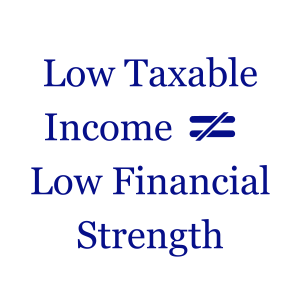
📌 Low taxable income does not always mean low real-world strength.
In fact, many investors intentionally show lower taxable income because they are using deductions wisely. That is often a sign that they have a solid accountant and understand how to manage their business.
But conventional financing does not always reward that.
A borrower may own multiple properties, have strong rental history, and have real cash flow, yet still struggle to qualify traditionally because the tax return does not reflect the whole picture in a way that fits standard underwriting.
A DSCR loan helps solve that problem because the lender is asking a different question.
Not, "How much did you personally make at your job?"
But, "How much does this property make?"
That is why DSCR financing gets the attention of experienced investors.
📈 For investors trying to scale, this is where DSCR starts to change the conversation.
How DSCR loans can help investors scale faster
If your goal is to build a rental portfolio, scaling matters.
A lot of investors hit a wall not because they lack vision, but because traditional financing becomes harder to work with as their portfolio grows. The underwriting process can feel like it is designed for salaried borrowers buying a primary residence, not investors building a business around cash-flowing assets.
A DSCR loan may offer a more scalable path.
When each property is evaluated on its own merit, investors can think more strategically. Instead of worrying that every prior mortgage will limit the next opportunity, they can focus on finding properties with solid rent potential, healthy cash flow, and long-term upside.
That does not mean every deal works. It does mean the framework is different.
And for many investors, that difference is what allows them to keep acquiring.
Can Airbnb and short-term rentals qualify?
🏡 In many cases, yes.
This is another reason DSCR loans have become so interesting to investors. In certain situations, projected income from Airbnb or VRBO can be used based on market data. That can create opportunity in vacation areas, college towns, and markets with strong short-term rental demand.
But this is not something to approach casually.
Short-term rental qualification has to be structured correctly. You need to understand the local market, market rents, operating expenses, appraisal methods, and investor guidelines. This is not plug-and-play financing.
Done right, it can open important doors.
Done poorly, it can create confusion and bad assumptions.
That is why strategy matters so much with DSCR lending.
Buying in an LLC: another reason investors pay attention
📂 Many DSCR loans allow you to close in an LLC rather than your personal name.
For a lot of investors, that is a big advantage.
It can support cleaner bookkeeping, clearer separation between personal and business activity, and an additional layer of asset organization. For serious investors trying to operate more like business owners than hobbyists, this can be a meaningful benefit.
Again, structure matters. The right entity setup depends on your overall plan, legal guidance, and long-term goals. But the flexibility here is one more reason DSCR financing stands out in the investor world.
How rental cash flow builds long-term wealth
A DSCR loan is not just about getting approved. It is about understanding what approval can help you build.
Real wealth is usually not built by flipping one house and hoping for a quick win. It is built by owning controlled, long-term, cash-flowing assets.
💰 Think about the math.
If one rental nets $300 per month after expenses, that is $3,600 per year. Five rentals at that same level puts you at $18,000 per year. Ten puts you at $36,000 per year.
And that is only part of the story.
You may also be gaining appreciation. Your tenants may be paying down the loan balance over time. There may be tax advantages. Equity can build quietly while income continues to come in.
That is how freedom starts to form.
This is why investors who think long term look beyond a single transaction. They look at what a portfolio can become over time.
What about rates, down payments, and requirements?
This is where it is important to be realistic.
DSCR loans are not a magic shortcut. They often come with larger down payment requirements, frequently around 20% to 25%, along with stronger credit expectations and the need for solid property cash flow. Rates can also be somewhat higher than what you may see with certain traditional conventional loans.
📊 But serious investors usually do not evaluate a deal based on rate alone.
They look at return.
If the property cash flows, appreciates, and supports long-term wealth building, then the interest rate is just one part of the equation. It matters, but it is not the whole story.
Some DSCR loans may also offer interest-only options, which can lower payments upfront and improve early cash flow. That can create flexibility, especially in the early years of ownership, though it needs to be used strategically.

The biggest mistake investors make
⏳ A lot of people wait.
They wait until the tax returns look better. They wait until they feel more polished on paper. They wait until conditions feel perfect.
Meanwhile, experienced investors are taking action. They are acquiring assets, locking in rents, building leverage, and letting tenants help pay down mortgages.
Perfection is often expensive.
That does not mean move recklessly. It means understanding the tools available to you and making decisions based on a real plan instead of fear or delay.
A DSCR loan is not a shortcut. It is a strategy tool.
Used wisely, it can reduce friction and help investors expand faster. Used carelessly, it can create risk. That is why good guidance matters.
Final Thoughts: Financing Should Support the Plan
The biggest value of a DSCR loan is not that it ignores tax returns or skips W-2s. The real value is that it can align financing with how investors actually build wealth.
If you are serious about real estate, the goal should not be to chase one random property. The goal should be to build a plan.
Maybe that is one property now and three later. Maybe it is a five-property strategy. Maybe it is ten over time. The right move depends on market rents, cash flow projections, down payment strategy, ownership structure, and long-term goals.
The point is this: financing should help you execute the plan, not unnecessarily block it.
For the right investor, a DSCR loan can be one of the smartest tools in the toolbox.
Bonus: Three DSCR Details Kansas City Real Estate Investors Learn Too Late
1. The state line can change your exit cost.
Most DSCR loans carry a prepayment penalty, a fee if you sell or refinance within the first few years. Some DSCR lenders don’t allow prepayment penalties on Kansas properties at all, while the same loan on a Missouri property usually carries one. If you’re comparing a rental in Overland Park to one in Lee’s Summit and you might sell or refinance early, ask how the prepayment terms differ before you choose. (The state line also changes how property taxes are assessed. We break that down in The Break-Even Trap.)
2. Interest-only can change your ratio.
On an interest-only DSCR loan, many lenders calculate the ratio using the payment without principal. The same property can show a stronger DSCR on an interest-only structure than on a fully amortizing one. It’s a common reason two quotes on the same house come back with different ratios, and it’s worth understanding before you decide a deal doesn’t work.
3. “Not eligible” at one lender can be “approved” at another.
First-time investor rules vary widely. Some DSCR programs require you to already own your home. Others accept first-time homebuyers with a higher credit score, a stronger ratio, and more of your own money in the deal. A single lender’s no isn’t the market’s no, which is exactly why working with a broker who can compare DSCR programs matters.
————————————————————————————————————————————–
FAQ: DSCR Loans for Real Estate Investors
What does DSCR stand for?
DSCR stands for debt service coverage ratio. It measures whether a property's income is sufficient to cover its debt payment.
How does a DSCR loan work?
A DSCR loan generally qualifies the deal based on the property's rental income rather than relying mainly on your personal income. In simple terms, the property qualifies, not you.
Do DSCR loans require tax returns?
Often, DSCR loans do not require the same personal tax return review you would expect with conventional financing. That is one reason they are popular with investors who use deductions aggressively.
Do DSCR loans require W-2s?
Many DSCR loans do not rely on W-2 income in the way traditional owner-occupied financing does. The focus is more on property income and cash flow.
Are DSCR loans good for real estate investors?
They can be very useful for investors, especially those focused on building rental portfolios, qualifying through property income, or buying through an LLC. They are not right for everyone, but they can be a powerful strategy tool.
Can you use a DSCR loan for Airbnb or VRBO?
In many cases, short-term rental income can be considered using market-based projections. The exact approach depends on the lender, property, appraisal, and market data.
Can I buy an investment property in an LLC with a DSCR loan?
Often, yes. Many DSCR loans allow closing in an LLC, which can appeal to investors who want a cleaner business structure and asset separation.
Do DSCR loans require a large down payment?
They often require a larger down payment than some traditional loan options. A common range is around 20% to 25%, though it depends on the scenario.
Are DSCR rates higher than conventional rates?
They can be. But investors typically weigh that against cash flow, appreciation potential, flexibility, and long-term return.
Is a DSCR loan a shortcut?
No. It is better viewed as a strategy tool. It can help the right investor move faster, but it still requires careful planning, solid numbers, and smart execution.
More Questions to Ask Before Choosing a DSCR Loan
🔷 Do all DSCR lenders have the same guidelines?
No. DSCR loan guidelines can vary significantly by lender or investor. Credit score minimums, DSCR ratio requirements, reserve requirements, property type rules, short-term rental guidelines, LLC eligibility, and cash-out rules may all differ.
🟦 Can one DSCR lender deny me while another approves me?
Yes. A DSCR loan denial from one lender does not always mean the deal is dead. It may mean the borrower, property, or investment strategy needs a different DSCR investor with different guidelines.
🔷 Why should I use a mortgage broker for a DSCR loan?
A mortgage broker can compare multiple DSCR loan options instead of forcing the borrower into one lender's box. This can be especially helpful for investors using LLCs, short-term rentals, cash-out refinances, unique properties, or lower DSCR scenarios.
🟡 What makes a DSCR loan harder to place?
Common placement challenges include low DSCR, lower credit scores, limited reserves, first-time investor status, short-term rental income, recent property acquisition, cash-out seasoning, rural properties, mixed-use properties, condotels, non-warrantable condos, or entity ownership.
Ready to Talk Through Your DSCR Loan Options?
If you are considering a DSCR loan for your next investment property, Darren Copeland and the Summit Lending team can help you discuss your situation and build a plan that makes sense.
📞 Call Today: 816-268-4025
📱 Text our team: (816) 207-2828
📧 Email: darren@summitlendingkc.com
🌐 Web: www.summitlendingusa.com
Before you write an offer, run this stress test first:
The Break-Even Trap: How to Stress-Test a Rental Property Before You Buy